Las Vegas Strip: The Early Years

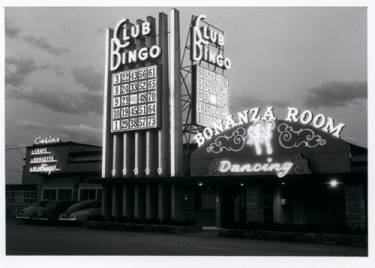
 Club%20Bingo%20dusk%20copy.gif


Everyone thinks they know the real history of the Las Vegas Strip

But did you know that Bugsy Siegel didn't build the Flamingo Hotel from scratch? 

Do you know who the first nude showgirl was? 

Do you know who Jakie Freidman was? 

Do you believe that Tommy Hull was inspired to build the El Rancho Vegas because his car broke down and he counted the cars that passed him on the old highway?

Well, if you don't know the real answers to these questions or if you think you do and want confirmation of that, then come out to the Springs Preserve on Thursday evening, July 3rd for our next installment of "Untold Stories' where we explore the real history of the early years of the Las Vegas Strip.

Joining us will be:

Betty Bunch: a dancer who came here in the early 1950s and is still dancing on the Strip today.

Lisa Medford; the first nude showgirl (okay, we gave you one answer)

George Stamos: writer of the original Strip Hotel histories for the Las Vegas Sun in 1979.

Dr. Michael Green: historian and Professor at the College of Southern Nevada.

It all happens on July 3rd at 7:00 pm at the Springs Preserve.  Gas is over $4 a gallon so if you are spending the 4th of July weekend in town, then come join us for a great night of history and stories.

Come early for the Farmers Market and the Mojitos and Mozart in the Wolfgang Puck Cafe.

Untold Stories:  The Las Vegas Strip: The Early Years

Thursday, July 3rd

Las Vegas Springs Preserve

7:00 pm

Admission $12.00 


We hope to see you there! 


Beneath the Neon Exhibit

Our good friend and FCLV member, Brian Paco Alvarez, is unveiling his latest exhibit this evening at the CAC.

We encourage everyone to go!


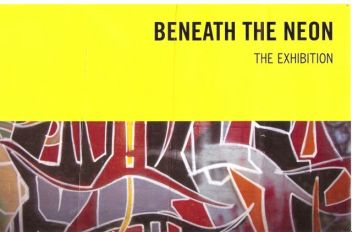
beneath-20the-20neon00011.jpg 


The city's underground flood channels are the background for Matthew O'Brien's adventures in his book, "Beneath the Neon: Life and Death in the Tunnels of Las Vegas." Now, the channels are also the inspiration for the Contemporary Art Collective's latest exhibition opening Thursday, June 26th—Beneath the Neon: The Exhibition.


The month-long exhibit provides locals and tourists the ability to explore the underground channels of Las Vegas through the eyes of local artist Brian "Paco" Alvarez, who has recreated the storm drains in the CAC's gallery using water, gravel and graffiti.


The comprehensive exhibit includes artifacts as well as a video with footage from O'Brien's adventures in the tunnels, and black-and-white photography from Danny Mollohan.


The grand opening reception is at 6 p.m. on Thursday, June 26 and the pre-First Friday reception is at 6 p.m. on Thursday, July 3.


At 6 p.m. on Thursday, July 17, O'Brien is scheduled to be on hand for a book signing and panel discussion regarding his experiences in the storm drains. Former drain-dweller William Wieland will also be on hand for the discussion.


Armed with a flashlight, tape recorder and expandable baton for protection, O'Brien explored the Las Vegas storm drains for more than four years. He discovered bizarre miscellaneous items, art and architecture and—most interestingly—people. His adventures in this uncharted underworld are chronicled in "Beneath the Neon," which was published by Huntington Press in June 2007.


Established in 1989, the Contemporary Arts Collective began as an extension of the University of Nevada, Las Vegas Department of Fine Arts, providing a venue for students to share ideas, concepts and exhibit their work. In 1993, the CAC became a non-profit organization to further expand the promotion of contemporary art through outstanding exhibitions featuring both local and national artists and educational programs. Located in the heart of 18b— the Las Vegas Arts District. Today, the CAC is dedicated to promoting contemporary art through avant-garde exhibitions and educational programs within the Las Vegas arts community. The CAC is funded in part by the Nevada Arts Council, Nevada Community Foundation, The Arts Factory and benefactors, patrons and CAC members. The CAC is located within the Arts Factory at 101 E. Charleston Blvd., Ste. 101. For member


Cultural Tourism in Las Vegas: Would it work?

According to Wikipedia:

'Cultural tourism' (or culture tourism) is the subset of tourism concerned with a country or region's culture, especially its arts. It generally focuses on traditional communities who have diverse customs, unique form of art and distinct social practices, which basically distinguishes it from other types/forms of culture. Cultural tourism includes tourism in urban areas, particularly historic or large cities and their cultural facilities such as museums and theatres

One of the things we discussed at lunch last Saturday was Cultural Tourism in Las Vegas.  In a city that has marketed itself as America's Playground for almost 60 years now is it any wonder that the majority of people who visit or just moved here have no clue that we have cultural spots like museums and art galleries.

Well, Las Vegas is filled with museums, art galleries and lots of history.  But those places almost never get advertised by the Las Vegas Convention Authority, the Nevada Tourism Office, the City or the County.  Is the LVCVA that worried that tourists might actually leave the Las Vegas Strip for a few hours to soak up some history and never come back to the black jack tables?  Must everything that promotes Las Vegas be about excessive drinking, smoking or snarky behavior that you regret the next day?

The City and the mayor, in particular, keep trying to promote Fremont Street and downtown Las Vegas as a tourist mecca.  But one of the endearing qualities of Fremont Street is the history of the area.

Why in a town of 2.4 million people, in a city that is barely 103 years old is it so difficult to find historic neighborhoods, driving tour maps or even information about walking tours?

You can go to small towns through-out this country and they all seem to promote their history.  From large cities such as New York City and Los Angeles to small communities in the Sierra Nevadas to the shores of Cape Cod, you can find historic districts with docents willing to answer questions, maps to museums, art galleries and other significant cultural sites worth visiting.

I think Cultural Tourism is a natural fit for Las Vegas.  We have museums for everything from our Natural History to Atomic Testing, the Clark County Museum has Heritage Street filled with homes and buildings moved from around the Las Vegas Valley, the Nevada State Museum covers our archaeological history to our Post-War history with new showings for artists every 90 days.  The Las Vegas Springs Preserve has walking tours, a flash flood simulation and exhibits about the importance of water not only to our past but to our future.

These are wonderful museums, many of them with state-of-the-art exhibits.

There is a Cultural Corridor and an Arts District.  And there is Fremont Street and the surrounding area with many of its original or second generation buildings still standing behind new facades. 

New York City has Broadway, Los Angeles  has the Sunset Strip and Hollywood Blvd, San Francisco has many significant streets of historic interest.  Fremont Street is our equivalent.  Yes, it's filled with girly joints and gaming casinos and tee-shirt stores but behind all those facades is real history dating back to our roots.  Behind the facade that is Binions is the Hotel Apache and, on the western corner behind the facade,  pieces of the beloved Mint Sign, beneath the facade of the La Bayou is Mayme Stoecker's Northern Club and Wilbur Clark's Monte Carlo Club.  The Pioneer Club has Vegas Vic and beneath its facade the original building when it was Beckley's Store for Men. 

There is real history on Fremont Street.  It was our Main Street, USA with a strange and wonderful twist to it.  It evolved over the years from the heart of our community to Glitter Gulch to the Fremont Street Experience of today.  But beneath the canopy and despite all the development and the disregard for the homes and the small shops and the mom and pop businesses that co-existed alongside the gaming halls, lies our history just waiting to be explored not only by us but by tourists as well. 

Not everyone that comes to Las Vegas comes to gamble and indulge in excesses they may regret in the morning.  Families come here bringing their children to visit their grandparents, friends from around the country and around the world come here to visit friends they went to school with when they were young or went to college with or have been friends with for more years than they can remember.  The bottom line is they would probably love to know that there is more to Las Vegas than just gambling, drinking and what happens in Vegas, stays in Vegas.  But they rarely get that chance to explore the cultural side of Las Vegas because the vast majority of people who have moved here in the last 20 years don't know there is culture in Las Vegas. 

Why is it so difficult to find this information when visiting Las Vegas?

How do we get the city we love to take Cultural Tourism seriously, especially in the downtown area where so much of the city's early history still exists (but is threatened on a daily basis by development)

If you have any ideas, please respond.  I would love to get a dialog going about cultural tourism and how to make it work.
 

Report on the History Preservation Summit

Saturday afternoon was great!  A number of preservationists:  Courtney Mooney repping the City's Office of Historic Preservation, Richard Hooker from City Cultural Affairs, Historic Preservation Commissioner Bob Stoldal, Westside historian Trish Geran, News Bureau curator Brian Paco Alvarez, Ellen Leigh from the Atomic Testing Museum, Mary-Margaret and Cary Stratton from the Atomic Age Alliance, Dennis McBride from the Nevada State Museum, Las Vegas, Jack LeVine and Mary Joy Alderman from VeryVintageVegas, Neighborhood Association leader Pam Hartley, Joel Rosales from LeavingLV.net and yours truly all converged on the Boulder Hotel in beautiful Boulder City to meet for lunch and to talk with Preservation Action director, Heather MacIntosh.

We learned a number of things about how PreservationAction can help us with preservation issues here in Las Vegas. PreservationAction helps with grass-roots efforts and networking.  Heather was quite excited about the possibilities here in Southern Nevada and also very helpful on how we can learn from other western cities that are already ahead of us in terms of historic preservation.

Unfortunately, not all the local groups were there.  Missing were reps from the County Museum, the Neon Museum, the Mob Museum, the Liberace Museum and the Preservation Association of Clark County.

Courtney Mooney is trying to organize an all-day Preservation Summit where all the groups can come together, learn more about what each group is doing and hopefully start working together to pool our energies.  We can't expect the rest of the Valley to take Preservation seriously unless we start talking as one voice.  This will also help us work more effectively with PreservationAction.  Everyone at this meeting plans to be there and we hope the other groups around the Valley will join us.

How can you help?  Get involved.  Join a group like Friends of Classic Las Vegas and help us to continue to bring attention to preservation issues across the Valley.  We have some great ideas for bringing attention to the destruction happening around the old High School and the auto courts on East Fremont among other issues.  Your help is needed and this gives you an opportunity to have a voice in helping to save and preserve our history.

For more information on becoming a member click here