The Sahara: Staying There, How Bad Can It Be? Bad.


First, a little back story.  My husband has been going to the National Association of Broadcasters yearly conventions for over thirty years.  For the last six years, he has been employed by a large motion picture studio and is the engineer for their extreme sports channel, FuelTV.

For the last 14 years between NAB and visiting my parents, we have stayed in many hotels on the Strip from economy (that would be you, Tropicana) to very nice (the Venetian, Thanksgiving 2001).  A few years back, Fox sent the crew up for NAB and we stayed at Bally's, which is actually a very good place to stay as long as you don't eat in any of the restaurants.

For the last two years, we have been staying at the Orleans and the only bad thing we can say about that hotel is the long walk from the parking lot to the hotel rooms feels like a ten mile hike.  We've enjoyed many of the restaurants at the Orleans as well.

This year, in a cost-cutting measure and with the idea of being able to send more people, Fox and the Sahara made a deal for the mid range employees and some of the upper executives to stay there during NAB.

Its' a historic property, one of the last remaining original Strip hotels.  It's had its ups and downs and during the winter closed one of its two hotel towers.

But, it had the advantage of being close to the Convention Center and we could take the Monorail.

So, we thought (and we weren't the only ones), how bad can it be?

Well, I am sad to report, it's pretty darn bad.

We checked in mid-afternoon on Saturday.  The registration desk had three people working and a line that snaked down the hall.  The clerk we got was not polite and I would be truthful in saying that she was not only semi-rude but refused to work with us when we discovered they had messed up our reservation.  They had our room type wrong as well as Jon's check-out date wrong.  After going round and round with her about the wrong check out date she was finally able to sorta fix it in the computer but said we should call down later that evening and confirm that it went through!  (Because really, on your first weekend night in Las Vegas you want to have to plan for calling the hotel to make sure they didn't screw up fixing the screw up on their end, I guess.)  That should have been the first warning sign.

Instead of the king bed we had reserved, all they had to offer (for one night and then we could move) were two queen beds.  We were offered the Hospitality Suite for another $50 a night and felt like victims of a bait and switch.  We declined to spend the extra dough on the suite.

After all, how bad could an average room be?

Turns out, pretty bad.  After we escaped the Clerk from Hell, we stopped by the small shop, Sahara Spirits,  that sold water and sodas.  We were parched and hoping to get some cold water.  The smell from the shop hit us in the face as we walked in.  It was that Vegas sewer smell and we turned around and left without buying anything.

The lobby that once had been brightly decorated with an Egyptian and Casbah motif was now shades of gray.  I am not joking.  Gray.  Because the color is such a pick-me-up?  Whoever thought the grey and brown color scheme works should be fired.

The elevator took us up to our floor.  As we walked down the corridor and got closer to our room we could hear the Ice Machine making enough noise to wake the dead.  A hole was knocked into the wall next to our door.

By the next day we could sympathize with whoever had hit the wall.  They were likely tired of dealing with the staff.

Our room had a view of the Stratosphere Tower (where Fox had tried to house our group but was unsuccessful).  It also had two different types of carpet.  One type was for the entrance and felt like astro-turf.  The other, completely different carpet type, covered the rest of the room.

The telephone was located on the desk across from one of the beds.  This meant if you left a wake up call, you had to get out of bed to answer it.  I am still trying to understand the logic of that one.

The air conditioner made a wailing sound.  Though there was a thermostat on the wall, that didn't work but the old fashioned wall air conditioner did.  It was making the wailing sound.

The box springs had smudges on the top of them where they met the mattress.  We didn't want to know.

There was no remote for the TV and we had to call housekeeping to bring us another.  The guy who brought it implied we had palmed the other.  I guess guests of the Sahara have nothing better to do than rip off remotes that work 20 year old televisions.

We went out Sunday morning about 10:00 am and returned to the room at 3:30 pm.  Housekeeping had not been there.  A call to them let us know that they were working their way towards us and it would probably be another hour.

We walked around, played a few slots (which took our money fairly quickly with no return) and ended up sitting by the pool area, in the wind and cool weather.

Finally, our room was cleaned (or what passes for clean at the Sahara).

That night we had dinner with Jon's co-workers.  Most of them were staying at the Sahara and each of them had their own horror stories they told us about checking in and more.

As the dinner progressed, we began joking about going to Fry's Electronics to buy black lights so that we could run our own CSI-type tests for bodily fluids in our rooms.

We all agreed that we really didn't want to know.

The sad part is that it doesn't have to be this way.  Mike Nolan and the crew at the El Cortez have trail blazed the path for how to restore and rejuvinate an aging hotel/casino.  Yes, it costs some money but the El Cortez is doing a land office business these days and the majority of people who stay there are having a good time.

The same can't be said for staying at the Sahara.

Bottom line, I don't think Fox will be returning to the Sahara (everyone we met was planning on lodging complaints with the Fox Travel office based on their daily experiences with the staff).

I don't see us ever going back as well.

Which is too bad.  The hotel deserves better treatment from her owners and her staff.
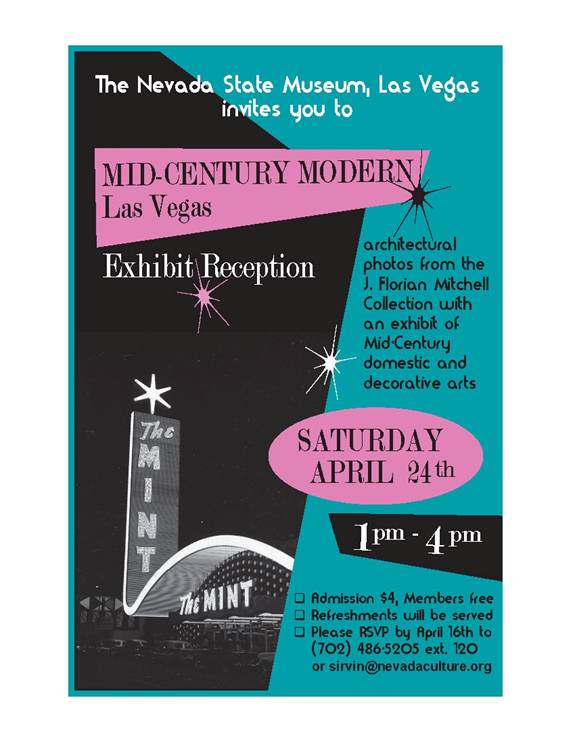
 

Mid-Century Modern Exhibit at the Nevada State Museum, Las Vegas


This is going to be a wonderful event.  Dennis McBride, Tom Dyer, Wes, Paul and the crew at the State Museum have been working on this exhibit for months.  Some of the decorative arts on display are from Dennis' own fabulous Mid-Century Modern collection.

The photos, of course, are from the wonderful J. Florian Mitchell collection that we have talked about here and that were part of the inspiration for our wonderful Mid-Century Modern day last fall.

I am hoping that Dennis can do a blog piece about choosing the photos and items for the exhibit so stay tuned.

In the meantime, be sure to RSVP to Stacy Irvin as you don't want to miss this wonderful homage to Mid-Century Modern Las Vegas!

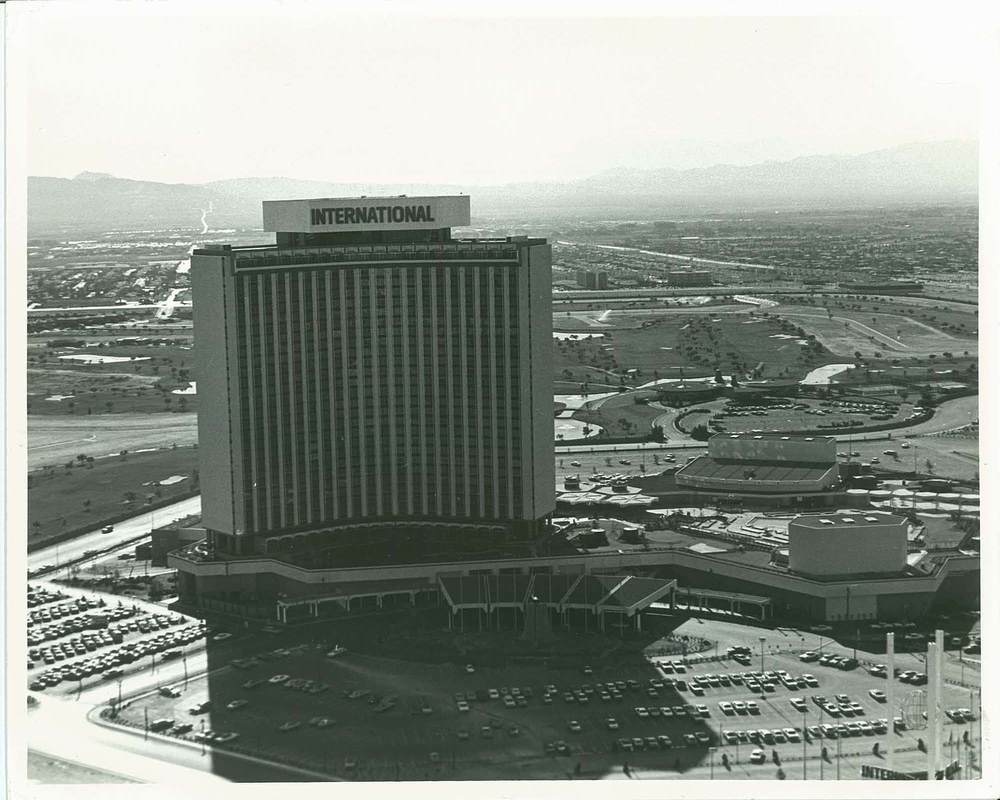
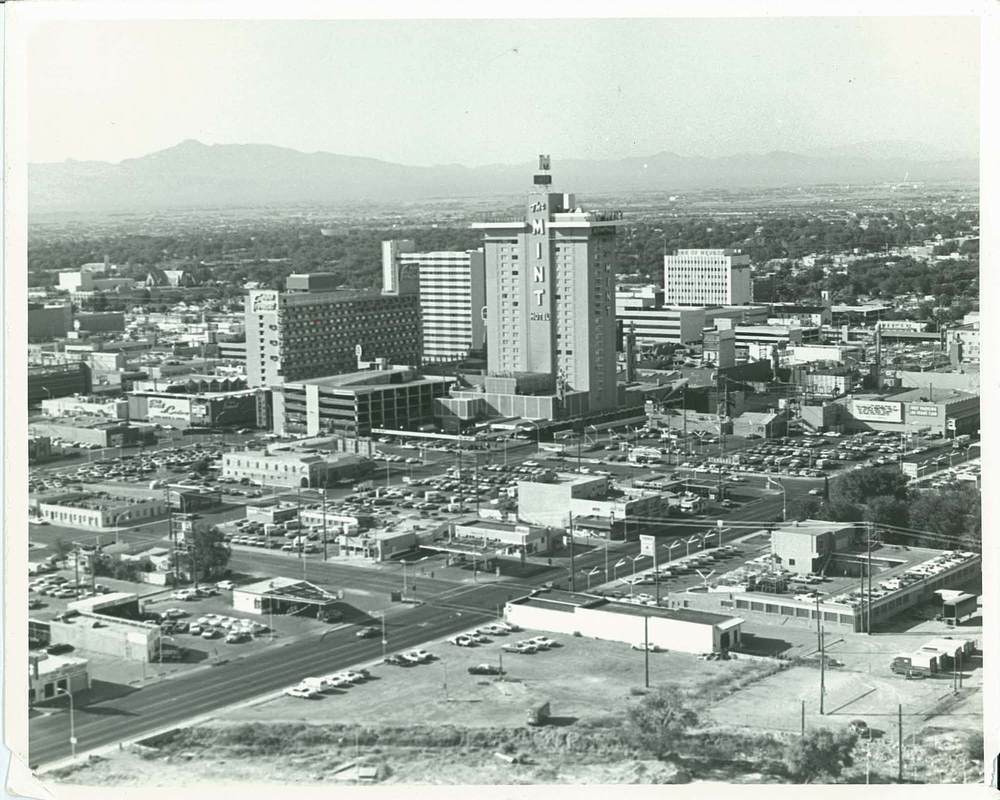
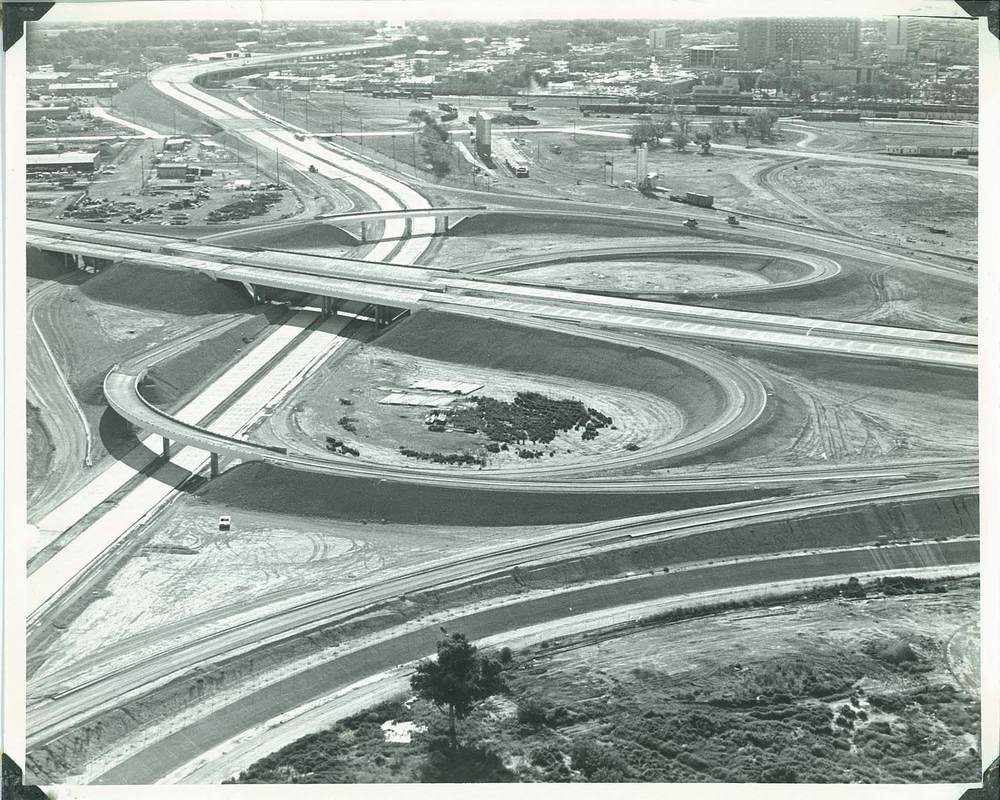
Las Vegas Photos: 1960s

Thanks to Friends of Classic Las Vegas members Wayne and Judy Bundorf over the weekend I will posting some photos of freeway construction from the mid and late 1960s.

Hope you enjoy!

The International Hotel home to Elvis, Ike and Tina Turner and owned back then by Kirk Kerkorian


A view of Downtown Las Vegas with the Mint (now Binion's closed tower) in the background


The Spaghetti Bowl being laid out

A Conversation with Alan Hess

As readers here know, Alan Hess is the go-to guy for Mid-Century Modern architecture and the automobile culture that surrounded it.  He was one of the guests at our Salute to Walter Zick last fall.  In addition to being the go-to guy, he is an author of a variety of work on the various aspects of the era.  From "Googie" his look at the coffee shop and diners to "Palm Springs Weekend" celebrating the joys of that Mid-Mod mecca to "The Ranch House".  But for Las Vegas Mid-Mod fans, we all love "Viva Las Vegas: After Hours Architecture".  If you haven't read this book yet, get thee to the library or better yet, his website.

I talked with Alan a few days ago about Mid-Mod and Las Vegas:

      What is mid-century modern architecture and why is it important?

After World War II, America found itself on the threshold of a promising future. After the Great Depression, people finally had money and jobs. New technologies offered amazing possibilities: television, automatic transmissions, washing machines in your home – all brought a new, easier way of life. Mid-century Modern architecture mirrored those changes. It created new shapes and used new materials (such as steel, glass, plastic, and concrete) to give people a sense that they were living in a new era.

       What is roadside architecture?  Why was neon so important to Fremont Street and the Strip?

The automobile made the twentieth century unique. Cities grew in size because of it. People suddenly had great personal mobility. And the American city took on a new shape in response to these changes. A key element of these changes was a new kind of architecture suited to the car. Drive-in markets, drive-in movies, drive-in restaurants, drive-in banks, gas stations, car washes, and many other types of buildings along the roadside served the way people were living now that they had cars. A big part of this architecture was signage, and neon (a new technology in the 1920s) proved ideal in creating large, vivid signs that could be seen from blocks away. Beginning in the 1930s, Fremont St. became one of the most innovators for neon signs, and neon urbanism, in the nation. This exploration continued on the Strip in the 1950s.

      Which classic Las Vegas neon sign do you miss the most?  Favorite classic Las Vegas casino/hotel?

The pinnacle of Las Vegas neon was reached in the 1960s. Those signs are mostly gone now, but they remain one of the highpoints of American art. The Dunes, the Aladdin, the Stardust, the Frontier, the Riviera, the Sahara were all great. The Stardust was one of my favorites, with a scintillating cloud of light, as if falling from the heavens. The Aladdin was a true and original phantasmagoria, evoking veils, jewels, and a Thousand and One Nights. I have the fondest memories of the Dunes because of the shear power of its animation, shooting light into the night sky like a rocket, but completely silently.

 You did a lot of research for your book, "Viva Las Vegas: After-Hours Architecture." What was some of the information that surprised you?  Will there be an updated version of the book?

Most of the information in the book was a surprise to me. I had questions about who had designed these hotels and signs since reading Learning From Las Vegas by Venturi, Scott Brown and Izenour in 1975. Who had designed these buildings? Which came first? How did they evolve, and influence each other? Where did they come from? The most illuminating fact was that most of the original architects, who set the standards and models, were from Los Angeles, and had honed their startlingly new conception of auto Modernism while designing the drive-ins and Googie coffee shops there. I would like to do an update of Viva Las Vegas, which was published in 1993, but have no current plans.

 What was it about Las Vegas that brought so many well-known architects like Welton Becket, Paul R. Williams, Wayne McAllister and many others to Las Vegas to design buildings and hotels?

As Venturi, Scott Brown and Izenour said, Los Angeles was the Rome, and Las Vegas was the Florence of this type of Modern architecture. There were strong economic and personal links between the two cities that made it natural for those LA architects to work in Las Vegas.

 What can we learn from the mid-century modern and roadside architecture of classic Las Vegas?

The innovations of this Modern architecture are still refreshing. Especially in a new city like Las Vegas, the traditions of the past held no power. The architectural problems could be solved directly and imaginatively, and the budgets and recreational purposes of the architecture allowed experimentation. These days, the pendulum reacting against car-oriented architecture has swung too far. It needs to swing back a ways, and the purposefulness and creativity of these buildings help show the strengths in this kind of architecture.

  What do you think of CityCenter and the modern Las Vegas Strip?  Will City Center be the direction of the future for Las Vegas?

Las Vegas and the Strip continue to press the boundaries. That freedom allowed it to create the great architecture of the past. Back then as now, it also produces a lot of junk. City Center is an interesting piece of design, but it is largely disconnected from the course and concepts of Las Vegas architecture and urbanism. Its architects and developers have neither understood nor appreciated that history. More interesting innovations are going on in the creation of interesting public spaces along the Strip. Las Vegas signage was once the best in the world. It’s lost that position to places like Times Square, but there are occasional glimpses of Las Vegas regaining its footing and creating new electrographic architecture as great as its old architecture.